

How To Dispose Of Paint Cans?
Properly disposing of paint cans can be a tricky but essential task especially in a city like Chicago, where environmental regulations and waste management guidelines play a vital role in keeping the environment clean and safe.
Whether you’re tackling a home renovation project or clearing out old supplies from your garage knowing how to ethically and legally dispose of paint cans is crucial.
In this blog post, we’ll break down best practices, local policies and step-by-step methods for disposing of paint cans in Chicago.
Chicago’s Paint Cans Disposal Regulations
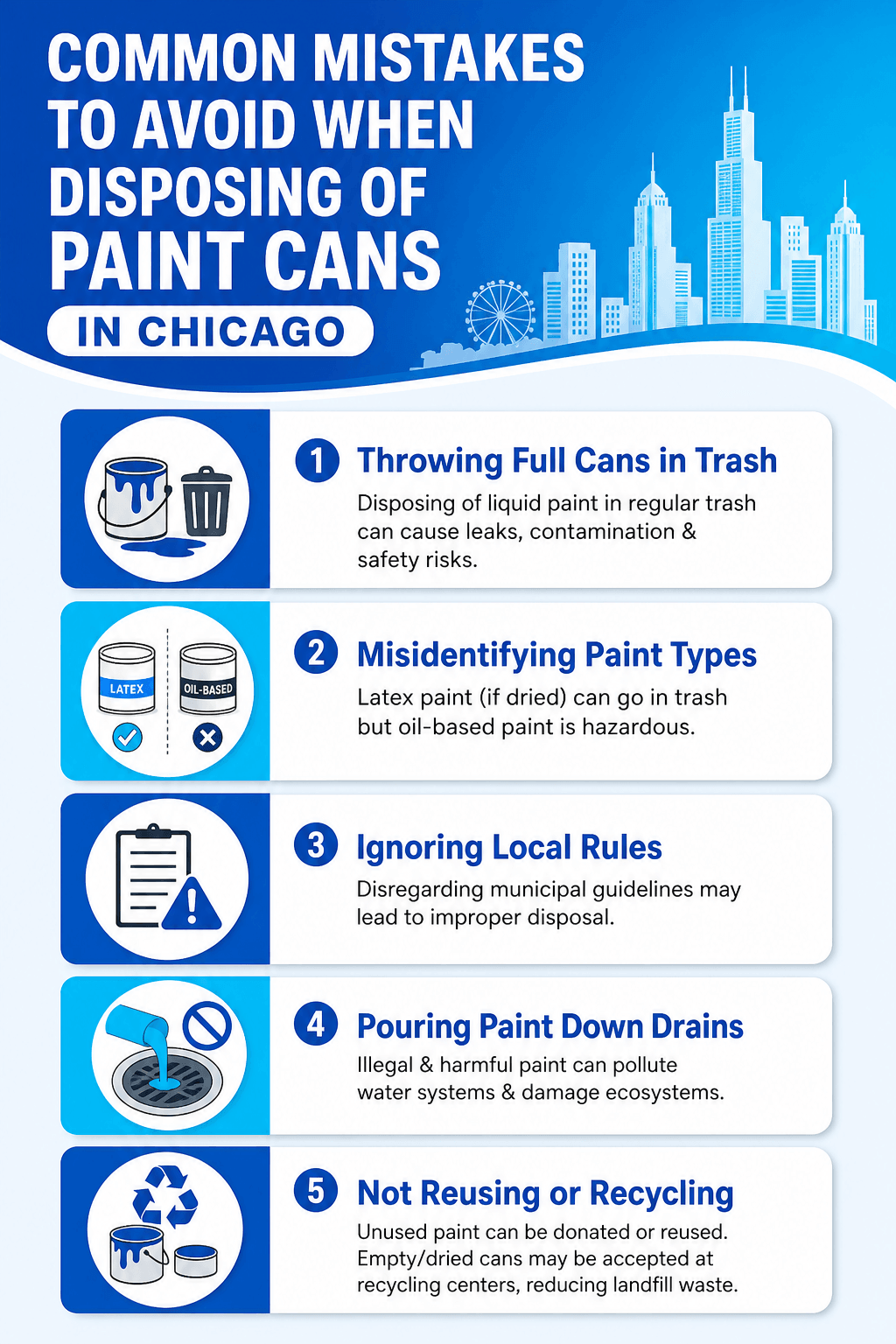
Chicago paint disposal requires adherence to specific regulations to ensure environmental safety. Water-based latex paint is considered non-hazardous and can be disposed of with regular household trash but only if it is dried out completely.
Residents can achieve this by leaving the paint open to air dry or by adding an absorbent material such as cat litter or shredded newspaper to speed up the drying process. On the other hand, oil-based paints are classified as hazardous waste and should not be thrown in regular garbage.
These must be taken to a Household Hazardous Waste (HHW) facility for proper disposal. Chicago offers HHW collection sites where residents can safely drop off oil-based paint and other hazardous materials.
7 Steps to Disposing of Paint Cans in Chicago
1. Determine the Type of Paint
First, check whether the paint you want to dispose of is latex (water-based) or oil-based. Latex paint is considered non-hazardous when dried but oil-based paint is classified as hazardous waste and requires special disposal.
2. Dry Out Latex Paint (if applicable)
If you are disposing of latex paint, allow it to dry completely before throwing it away. You can speed up the drying process by mixing the paint with cat litter, sand or a paint hardener available at hardware stores. Once dried, the paint can be safely disposed of in your household garbage.
3. Do Not Dispose of Oil-Based Paint in Regular Trash
Oil-based paint cannot be thrown away with regular garbage. This type of paint must be taken to a hazardous waste collection site for proper disposal.
4. Locate a Household Hazardous Waste Collection Site
Chicago offers designated household hazardous waste (HHW) collection sites where residents can safely drop off oil-based paints and other toxic materials. Use the City of Chicago’s website or other reputable resources to find the nearest HHW site.
5. Follow Chicago’s Recycling Guidelines for Empty Cans
Fully empty paint cans made of metal are often recyclable. Check the Chicago recycling guidelines to confirm you can place these in your blue recycling bin.
6. Reuse or Donate Usable Paint
If the paint is still in good condition, consider donating it to community organizations, schools or neighbors who might need it. Reuse helps reduce waste and extends the life of the material. Check for local donation programs or paint recycling initiatives.
7. Contact Professional Service for Large Quantities
If you have a significant amount of paint to dispose of, consider using professional cleaning services in Chicago that specialize in handling bulk quantities of hazardous materials safely.
By following these steps, residents can manage paint disposal responsibly while contributing to a cleaner, healthier environment in Chicago.
Also Read: How Much Does Pressure Washing Service Cost In Chicago?
Different Paint Cans & Their Disposal Methods
When it comes to disposing of different types of paint cans, there are a few additional steps to consider.
Here are some common types of paint and the recommended disposal methods for each:
- Latex Paint Cans: To dispose of latex paint can be safely disposed of by drying it out and throwing the can in the regular trash. However, if there is a large amount of leftover latex paint, it is recommended to take it to a local household hazardous waste facility for proper disposal.
- Oil-Based Paint Cans: Unlike latex paint, oil-based paints contain harmful chemicals and should never be disposed of in the regular trash. These cans must be taken to a household hazardous waste facility for proper disposal.
- Aerosol Paint Cans: Empty aerosol paint cans can be safely disposed of in the regular trash if they are empty. If there is any leftover paint inside, it is considered hazardous waste and must be taken to a household hazardous waste facility.
- Spray Paint Cans: Similar to aerosol paint cans, spray paint cans can only be disposed of in the regular trash if they are empty. Any remaining paint inside must be brought to a household hazardous waste facility for proper disposal.
- Rusty or Damaged Paint Cans: If you come across a rusty or damaged paint can, do not dispose of it in the regular trash. These cans may contain harmful chemicals and should be taken to a household hazardous waste facility for proper disposal.
- Paint Thinner and Solvents: These should never be poured down the drain or thrown in the regular trash. They should be disposed of at designated drop-off locations or on scheduled collection days.
Tips for Successfully Disposing of Paint Cans in Chicago
| Tips | Details |
|---|---|
| Identify the type of paint | Separate latex (water-based) from oil-based paint. Disposal methods differ based on type. |
| Dispose of oil-based paint at HCCRF | Take oil-based paints, solvents and aerosol paints to the Household Chemicals & Computer Recycling Facility (HCCRF), 1150 N. North Branch St. |
| Dry out latex paint before trash | Leave the lid open or mix with cat litter or paint hardener until fully solid. Only dry latex paint can go in the regular trash. |
| Do Not pour paint down drains | Avoid environmental contamination. Never pour paint into sinks, toilets or sewers. |
| Label and store paint cans safely | Keep paint cans sealed and upright. Clearly label with type (latex or oil-based) to avoid confusion during disposal. |
| Use a paid pickup service | For large quantities or convenience, use a service like Got Paint? Pickup for home collection (fees apply). |
| Follow local collection rules | Check the Chicago recycling and waste guidelines to stay updated. |
FAQs
Are there paint recycling programs in Chicago?
Yes, there are programs and facilities in Chicago that accept paint cans for recycling. Check with city-run household hazardous waste collection sites or private recycling organizations.
What is the penalty for improper paint disposal in Chicago?
Improper disposal of paint can result in fines and violations of city or state environmental laws. It is important to follow the correct disposal methods to avoid penalties.
Can dry paint cans go in regular recycling bins?
No, dry paint cans should not be placed in regular recycling bins. While the cans themselves may be recyclable, any remaining paint residue can contaminate other recyclables and render them non-recyclable. It is important to dispose of paint cans properly to avoid contaminating the recycling stream.
Are there any fees for dropping off paint cans in Chicago disposal sites?
Yes, there are fees for dropping off paint cans at Chicago disposal sites. Costs vary based on paint type (latex or oil-based) and container size. Non-residents or businesses may face additional charges. Always check local guidelines for up-to-date fee details.
What should I do if I can’t transport my paint cans to a disposal center?
If you can’t transport paint cans to a disposal center, explore local recycling or hazardous waste programs that offer pick-up services. You can also organize a neighborhood paint recycling event. Proper disposal helps protect the environment and public health and choose the option that best fits your needs.
Conclusion
Proper disposal of paint cans in Chicago requires understanding local regulations and utilizing available resources wisely. By following the guidelines set by the Chicago Department of Streets and Sanitation, residents can ensure that both leftover paint and empty cans are handled responsibly.
Participating in household hazardous waste collection events or using paint-recycling programs reduces environmental impacts while adhering to legal requirements. When in doubt, contacting local waste management services can provide clarity and support.
Through responsible disposal practices, Chicago residents contribute to a cleaner and more sustainable community.


