

How Often Should You Clean Your Gutters?
When it comes to home maintenance in Chicago one task that often gets overlooked is gutter cleaning. Yet, clogged gutters can lead to serious problems such as water damage, foundation issues, basement flooding and even pest infestations.
With Chicago’s unpredictable weather from heavy spring rains to falling autumn leaves and icy winters, keeping your gutters clean is not just a chore but a necessity. That’s why one of the most common questions homeowners ask is: How often should you clean your gutters?
In this post, we’ll share expert advice tailored to Chicago homeowners and share practical tips to keep your home safe and your gutters working efficiently year-round.
Expert Recommended Gutter Cleaning Schedule
Standard Recommendation: Twice Yearly
Most gutter maintenance experts agree on a baseline schedule. Homeowners are encouraged to perform gutter cleaning twice annually, specifically during spring and autumn. This timing aligns perfectly with Chicago’s seasonal patterns:
Spring Cleaning (April-May)
- Removes winter debris and ice damage
- Prepares gutters for heavy spring rains
- Allows inspection for winter-related damage
Fall Cleaning (October-November)
- Clears accumulated leaves before winter
- Prevents ice dam formation
- Ensures proper drainage before freezing weather
Enhanced Schedule for High-Risk Properties
Properties exposed to higher levels of debris might require an extra cleaning session at the beginning of summer. Most gutters and downspouts need cleaning 2 to 3 times per year, depending on the climate and if trees are nearby.
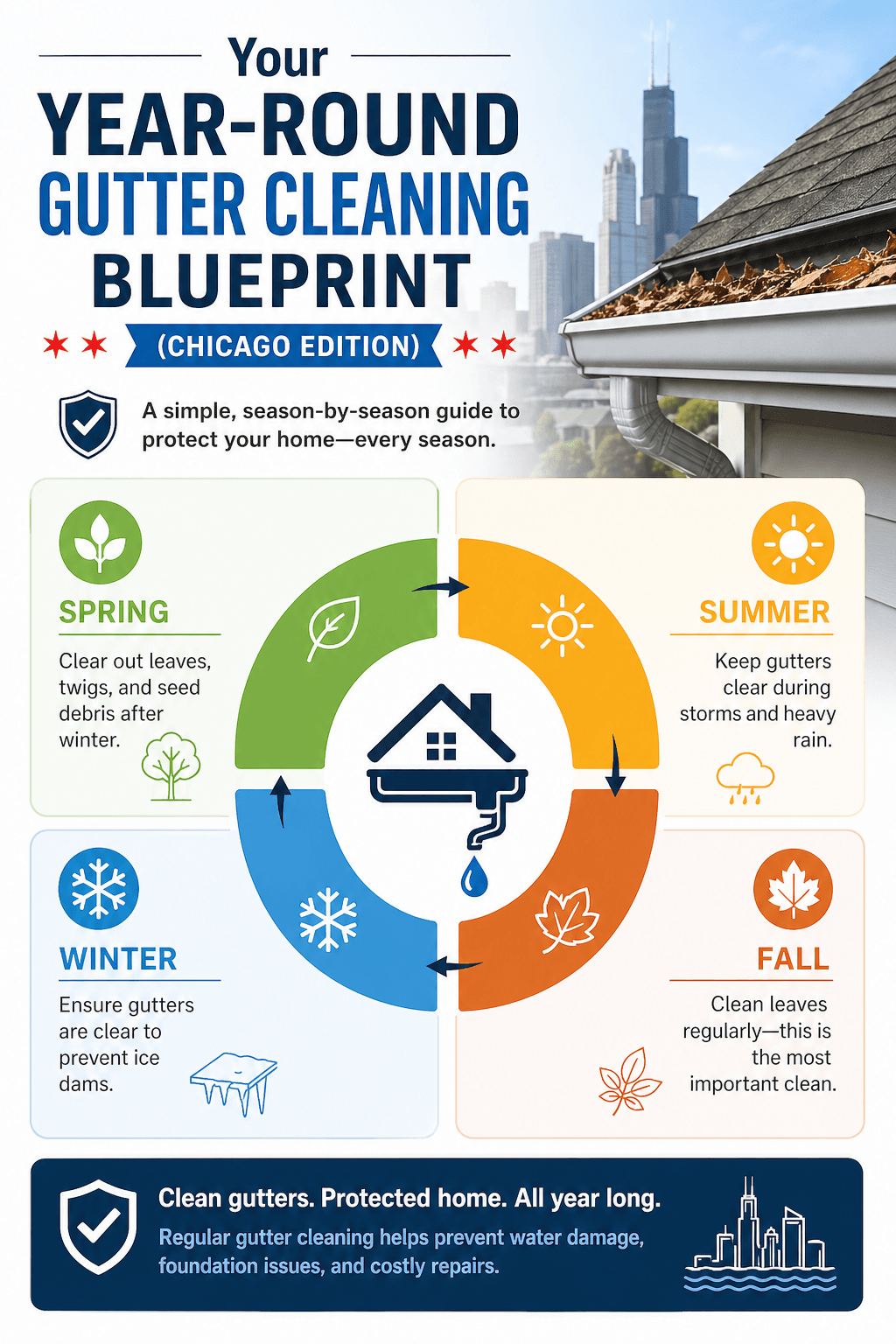
Seasonal Gutter Cleaning Guide for Chicago Homeowners
🌸Spring (March-May)
Frequency: Essential annual cleaning Focus Areas:
- Remove ice and snow debris
- Check for winter damage
- Inspect joints and connections
- Clear downspouts of accumulated ice
Chicago-Specific Considerations: Spring thaw can reveal hidden winter damage. The freeze-thaw cycles common in Chicago can cause gutters to shift or develop leaks.
☀️Summer (June-August)
Frequency: Mid-season inspection and cleaning if needed Focus Areas:
- Remove storm debris
- Check for proper drainage after heavy rains
- Inspect for pest nests or blockages
Chicago-Specific Considerations: Summer storms can be intense in Chicago, depositing significant debris in gutters.
🍂Fall (September-November)
Frequency: Critical pre-winter cleaning Focus Areas:
- Remove all leaves and organic debris
- Ensure downspouts flow freely
- Inspect gutter guards if installed
Chicago-Specific Considerations: Areas with many trees might need cleaning more often throughout the fall season. Chicago’s abundant tree canopy means heavy leaf accumulation.
❄️Winter (December-February)
Frequency: Emergency cleaning only Focus Areas:
- Remove ice dams if safely possible
- Check for overflow issues during thaws
- Monitor for ice-related damage
Chicago-Specific Considerations: Leaves in gutters are likely to cause clogs and will decrease water drainage speed, encouraging ice dams in winter.
Factors That Affect Gutter Cleaning Frequency in Chicago
When it comes to gutter cleaning in Chicago, there are several factors that can impact the frequency at which it should be done. These are:
- Seasonal Weather Patterns: Chicago experiences distinct seasons, including heavy rainfall in spring and snow in winter, which contribute to debris accumulation and require more frequent cleanings.
- Tree Coverage and Proximity: Homes surrounded by trees, particularly those with shedding leaves or pine needles, often experience more frequent gutter clogs.
- Wind and Storm Activity: Strong winds and storms can blow additional debris into gutters, increasing the need for cleaning after severe weather events.
- Type of Gutter System: Different gutter designs and materials, such as seamless or covered gutters, may reduce debris buildup compared to traditional open gutters.
- Age and Maintenance of Gutters: Older or poorly maintained gutters might trap debris more easily, necessitating additional cleaning and inspections.
- Urban vs. Suburban Location: Homes in urban areas may encounter debris from nearby construction or pollutants, while suburban homes tend to deal more with organic debris like leaves and twigs.
- Presence of Protective Gutter Guards: While gutter guards help reduce debris buildup, they are not foolproof and may still require maintenance, though less frequently than unguarded systems.
Understanding these factors is important as they can help you determine when your gutters need to be cleaned and how often.
Signs Your Gutters Need Immediate Cleaning
Here are the most common indicators that it’s time to clean them right away:
- Water Overflowing: If rainwater spills over the sides, your gutters are blocked and not draining properly.
- Sagging or Pulling Away: The extra weight from debris and trapped water can cause gutters to sag or detach from your roofline.
- Plants Growing Inside: If you see weeds, moss or tiny trees sprouting, it means dirt and debris have been sitting there long enough to act like soil.
- Stains on Siding or Foundation: Overflowing gutters can leave water marks on your home’s exterior or even pool around the foundation, risking cracks and leaks.
- Pest or Insect Activity: Birds, mosquitoes and rodents are attracted to clogged gutters filled with standing water and leaves.
- Basement Flooding: When gutters fail, water often collects near your foundation, increasing the chances of basement leaks.
- Visible Debris: If you can see leaves, twigs or nests sticking out of the gutters, they’re overdue for a cleaning.
Tip: Ignoring these signs can lead to costly repairs like roof leaks, damaged siding or foundation issues. Scheduling regular gutter maintenance saves you money and keeps your home safe.
Tips to Reduce Gutter Cleaning Frequency
Cleaning gutters is never fun but the good news is you can cut down how often you need to do it! Here are some easy tips to help keep your gutters clear and flowing:
- 🛡️ Install Gutter Guards: These act like a filter, blocking leaves and twigs so only rainwater passes through.
- 🌳 Trim Overhanging Trees: Less falling leaves = less mess in your gutters. Keep branches away from your roofline.
- 📏 Check the Slope: Gutters should slightly slope toward the downspouts. This prevents standing water and keeps everything moving smoothly.
- 🏠 Maintain Your Roof: Clear off moss, branches or excess shingle granules. A clean roof means cleaner gutters.
- 🔍 Do Quick Seasonal Checks: Even with guards, a quick look in spring and fall can save you from bigger problems later.
By following these steps, you’ll spend less time on ladders and more time enjoying your home while keeping your gutters and foundation safe from water damage.
FAQs
What time of year is best for gutter cleaning in Chicago?
In Chicago, the best times to clean your gutters are late spring (May/June) and late fall (October/November).
Spring cleaning removes seeds, pollen and debris after winter, while fall cleaning clears leaves before snow and ice set in. Some homes may need a mid-summer checkup if there are many nearby trees.
Do I need professional gutter cleaning or can I do it myself?
It depends. If you’re comfortable climbing ladders and have the right tools, DIY is possible. But for two-story homes, steep roofs or heavy debris, hiring a professional like Pressure Cleaning is safer and more thorough. Pros also inspect for leaks, loose brackets and other issues you might miss.
How do Chicago’s weather conditions affect gutter cleaning frequency?
Chicago’s harsh winters, heavy fall foliage and rainy springs make gutters work harder than in other cities.
Ice dams, snow melt and wind-blown debris mean most Chicago homeowners need at least 2 cleanings per year and homes surrounded by trees may need 3–4 times yearly.
How much does professional gutter cleaning cost in Chicago?
On average, gutter cleaning in Chicago costs $100–$300 for most homes, depending on:
- Home size and stories
- Level of debris buildup
- Accessibility of the gutters
Some companies also offer seasonal maintenance plans at discounted rates.
Can dirty gutters affect my basement?
Absolutely. When gutters overflow, water collects around your foundation, increasing the risk of basement leaks, flooding and even structural damage. Clean gutters are your first line of defense against basement water issues.
Final Words
Keeping your gutters clean isn’t just about home maintenance; it’s about protecting your investment. For Chicago homeowners, the city’s heavy rain, snow and falling leaves make regular gutter cleaning essential.
Ideally, gutters should be inspected and cleaned at least twice a year once in the spring and once in the fall with additional cleanings if you notice clogs or overflowing water.
By staying proactive, you’ll avoid costly repairs, prevent water damage to your foundation and roof and keep your home safe year-round. Whether you choose to handle it yourself or hire a professional, consistent gutter care ensures your home is ready to face Chicago’s unpredictable weather with confidence.


